|
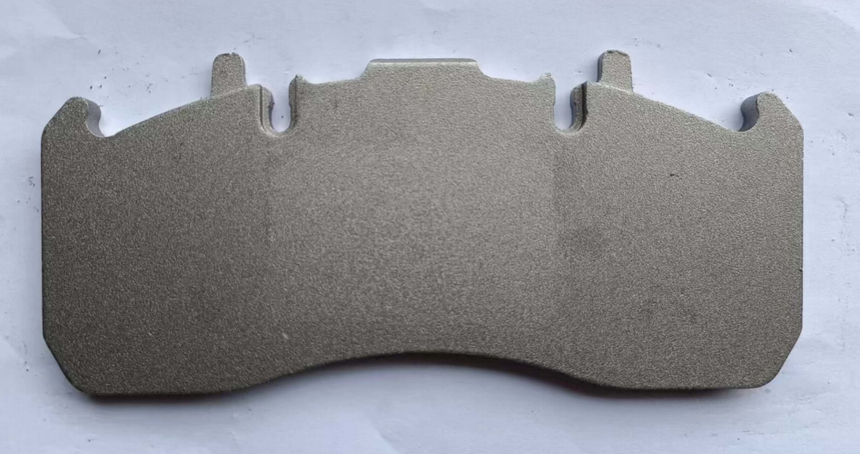
Automotive brake pad steel back: key to safety and innovationThe steel backing of brake pads is a crucial component of the automotive braking system, whose main function is to support the friction material and secure it to the brake caliper. As the core skeleton of brake pads, the steel back not only needs to have sufficient strength and stiffness to withstand the enormous pressure during braking, but also must ensure effective contact between the friction material and the brake disc to achieve reliable braking performance. The flatness and cross-sectional quality of the steel backing directly affect the overall performance of the brake pads. The ideal flatness can ensure even contact between the friction material and the brake disc, reduce braking noise, and improve braking efficiency. Accurate cross-sectional dimensions help maintain the overall structural integrity of brake pads and extend their service life.
In addition, the design of the steel back must also consider its heat dissipation performance. The heat generated during the braking process needs to be quickly conducted and dissipated through the steel back to prevent the friction material from overheating and causing a decrease in braking performance. Therefore, steel backs are usually made of high thermal conductivity steel and may contain special heat dissipation structures. In terms of installation, the steel back needs to be precisely matched with the brake caliper. This requires that the installation holes and shapes on the steel back must meet strict standards to ensure the correct installation and fixation of brake pads. At the same time, the steel back may also include some special designs, such as anti-corrosion coatings or shock-absorbing structures, to further improve the performance and lifespan of the brake pads. Overall, the steel backing of brake pads plays an indispensable role in the automotive braking system, and its quality directly affects the braking safety and comfort of the vehicle. With the development of the automotive industry, the performance requirements for steel backs are constantly increasing, driving continuous innovation in related technologies. Challenges and Breakthroughs in Steel Back Production Technology The traditional steel back production process faces many challenges. Firstly, quality control is quite challenging. Due to the enormous braking pressure that the steel back needs to withstand, its flatness and cross-sectional dimensions must be precisely controlled, but traditional processes are difficult to ensure that every steel back meets ideal standards. Secondly, the lifespan of the mold is relatively short. Frequent mold replacement is required during the production process of steel backing, which not only increases production costs but also reduces production efficiency. In addition, traditional craftsmanship also has shortcomings in material utilization and energy consumption, resulting in high production costs. Overall, traditional steel back production processes have significant limitations in accuracy, efficiency, and cost control, making it difficult to meet the modern automotive industry's demand for high-quality and high-performance steel backs. Faced with the limitations of traditional craftsmanship, Datong Hydraulic Company has launched a specialized servo hydraulic press for brake pad steel backing, bringing revolutionary breakthroughs to steel backing production. This device adopts advanced servo control technology, which can accurately control pressure and speed, thereby significantly improving the flatness and cross-sectional quality of the steel back. Compared with traditional processes, servo hydraulic presses not only improve production efficiency, but also extend the service life of molds and reduce production costs. In addition, the device also has intelligent monitoring function, which can monitor key parameters in the production process in real time, detect and correct potential problems in a timely manner, and further improve product quality. The innovative solution of Datong Hydraulic not only overcomes the limitations of traditional processes, but also brings higher precision, efficiency, and lower cost to steel back production, providing strong guarantees for the safety and reliability of automotive braking systems. |