|
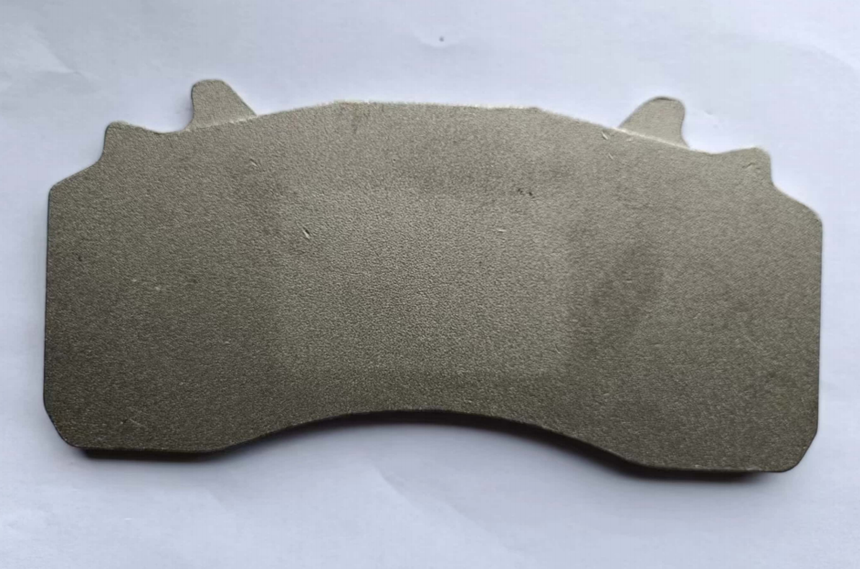
What factors determine the quality of brake pad steel backing?The quality of brake pad steel backing mainly depends on the following factors: 1、 Material quality Steel type High quality brake pad steel backing is usually made of specific types of steel, such as low-carbon steel or alloy steel with good strength and toughness. Different types of steel exhibit varying degrees of hardness, strength, toughness, and corrosion resistance. For example, some high-performance brake pad steel backs may use alloy steel, which has higher strength and wear resistance than ordinary low-carbon steel, and can better withstand the pressure and friction generated during braking. Material purity High purity steel can ensure stable performance of the steel backing. If steel contains excessive impurities such as sulfur, phosphorus, and other elements, it will reduce the strength and toughness of the steel back, affecting its service life. Legitimate manufacturers will conduct strict screening and testing of raw materials to ensure that the purity of steel meets standard requirements.
2、 Manufacturing process Stamping process Accurate stamping technology can make the shape and size of the steel back more precise, and it can be more tightly combined with the friction material of the brake pads. Factors such as pressure and mold accuracy during the stamping process can affect the quality of the steel backing. For example, using high-precision stamping molds and advanced stamping equipment can ensure that the flatness and hole accuracy of the steel back meet the requirements, improving product consistency and reliability. welding technology If there are welded components on the steel back, such as reinforcing ribs, installation brackets, etc., the quality of the welding process directly affects the strength and stability of the steel back. A good welding process should ensure that the weld seam is uniform, firm, and free of defects such as pores and cracks. Advanced welding technologies such as laser welding, argon arc welding, etc. can provide higher quality welding joints and improve the overall performance of the steel back. Surface treatment process The surface treatment of steel back can improve its corrosion resistance and adhesion with friction materials. Common surface treatment methods include galvanizing, spray coating, phosphating, etc. For example, galvanizing treatment can form a dense layer of zinc on the back surface of steel, effectively preventing rusting of the steel; Phosphating treatment can increase the roughness of the steel back surface and improve the adhesion with friction materials. 3、 Design Structure Shape and size Reasonable steel back shape and size design can ensure uniform contact between brake pads and brake discs, improving braking efficiency. The design parameters such as thickness, curvature, and ventilation holes of the steel back will affect the braking performance. For example, some steel backs adopt a wavy or curved design, which can increase the rigidity and heat dissipation area of the steel back, improve the braking effect and service life. Strengthen the structure Some steel backs will be designed with reinforcing ribs, protrusions, and other structures to improve the strength and stability of the steel back. The position, shape, and size of the reinforced structure should be designed and calculated reasonably to ensure effective stress dispersion during braking and prevent deformation or fracture of the steel back. For example, setting reinforcement bars at key parts of the steel back can improve its resistance to bending and torsion, ensuring the reliability of braking. |