|
|
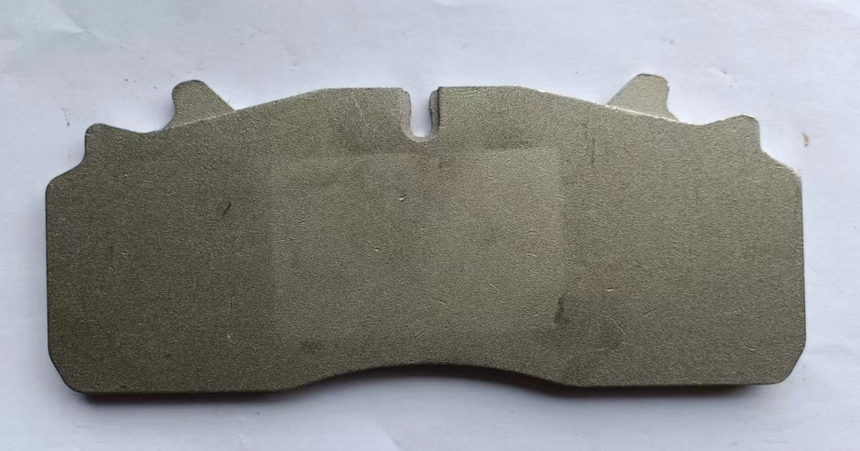
The details of the steel back of brake pads determine success or failure, and which key details cannot be ignored?In the production and use of brake pad steel backing, the following details are crucial and cannot be ignored: 1、 Dimensional accuracy Uniformity of thickness of steel back The thickness of the steel back should be kept uniform and consistent. If the thickness is uneven, it will cause uneven contact pressure between the brake pads and brake discs during the braking process, affecting the braking effect. For example, locally thin areas may be subjected to excessive pressure and deform, or even damage; Locally thick areas may not be able to fully contact the brake disc, reducing braking friction. High precision stamping molds and strict quality control measures should be used in the production process to ensure that the thickness tolerance of the steel back is controlled within a small range. Position accuracy of installation holes The installation holes on the steel back must be accurately positioned to ensure that the brake pads can be correctly installed on the brake calipers. Excessive deviation in the position of the installation holes can lead to unstable installation of the brake pads, causing shaking during braking and affecting braking performance. For example, a deviation in the installation hole position may affect the parallelism between the brake pads and brake discs, resulting in uneven wear during braking and shortening the service life of the brake pads and brake discs. Advanced processing equipment and precise positioning technology can ensure that the positional accuracy of the installation holes meets the design requirements. 2、 Surface quality planeness The surface of the steel back should be flat and smooth, without obvious unevenness or deformation. Uneven surfaces can affect the contact area and pressure distribution between brake pads and brake discs, reducing braking effectiveness. For example, surface protrusions may come into partial contact with the brake disc during braking, generating excessive pressure and temperature, leading to increased wear of the brake pads; The concave parts on the surface may not be able to fully contact the brake disc, reducing braking friction. During the production process, precision stamping, leveling and other processes can be used to ensure the flatness of the steel back. Cleanliness The surface of the steel back should be kept clean and free of impurities such as oil stains, rust, dust, etc. The presence of impurities can affect the bonding strength between the steel back and the friction material, leading to problems such as delamination and detachment of brake pads during use. For example, oil stains can reduce the adhesion between friction materials and steel backing, making brake pads prone to slip during braking; Rust and dust can affect the braking performance of brake pads and even damage the brake discs. Effective cleaning measures should be taken during production and storage to ensure that the steel back surface is clean and tidy.
3、 Welding quality Weld strength If there are welded components on the steel back, such as reinforcing ribs, installation brackets, etc., the strength of the weld must be high enough to ensure that there will be no cracking, detachment, or other problems during the braking process. For example, insufficient weld strength may result in welded components being unable to withstand significant stress during braking and breaking, causing the brake pads to lose support and seriously affecting braking safety. By using appropriate welding processes and welding materials and conducting strict welding quality inspections, the strength of the weld seam can be ensured to meet the requirements. Weld appearance The appearance of the weld seam should be neat and beautiful, without defects such as pores, slag inclusions, cracks, etc. Poor weld appearance not only affects the aesthetics of the product, but may also indicate quality issues within the weld. For example, porosity and slag inclusion can reduce the density and strength of the weld seam, while cracks may gradually propagate during use, leading to weld failure. During the welding process, welding parameters should be controlled well, the standardization of welding operations should be strengthened, and the appearance quality of the weld seam should be improved. 4、 Rust prevention treatment Selection of anti rust coating The steel back should undergo effective rust prevention treatment to prevent rusting and corrosion during use. Choosing the appropriate anti rust coating is crucial, as different coatings have different anti rust properties and durability. For example, galvanized coating has good anti rust effect, but the cost is relatively high; Phosphating coating has a lower price, but its rust prevention performance is relatively weak. Choosing the appropriate anti rust coating according to the usage environment and requirements can extend the service life of the steel back. At the same time, the compatibility between the anti rust coating and the friction material should also be considered to ensure that the coating does not have adverse effects on the braking performance of the brake pads. Uniformity and thickness of coating The anti rust coating should be evenly applied to the surface of the steel back, and the thickness should meet the requirements. Uneven coating can lead to poor rust prevention effect in local areas, making them prone to rusting; If the coating is too thin, it cannot provide sufficient rust protection, and if the coating is too thick, it may affect the bonding strength between the steel back and the friction material. By adopting advanced spraying equipment and process control measures, the uniformity and thickness of the anti rust coating can be ensured to meet the standard requirements. |