|
|
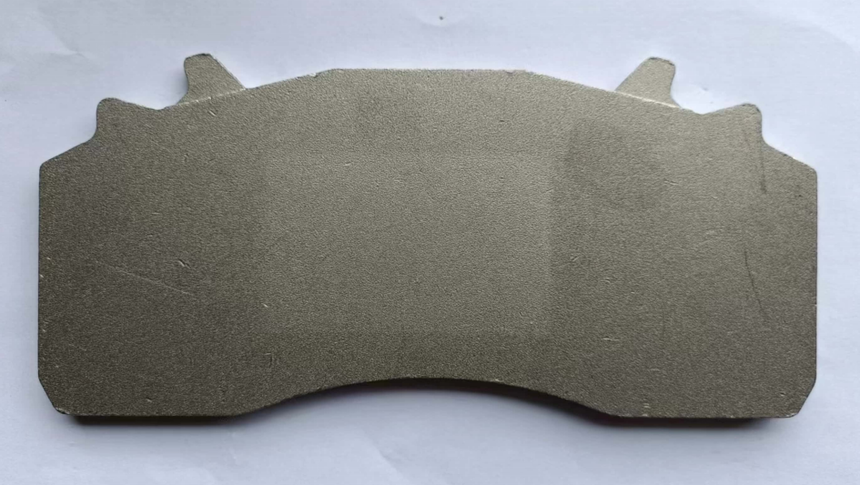
Why choose brake pad steel back for greater safety and reliability?1、 Basic characteristics of brake pad steel backing High strength and rigidity The brake pad steel back is usually made of high-quality steel, which has high strength. During the braking process, brake pads are subjected to tremendous pressure, especially in emergency braking or when the vehicle is heavily loaded. The high strength of the steel backing can effectively resist these pressures and prevent excessive deformation of the brake pads. For example, when a heavy-duty truck loaded with goods needs to brake urgently while driving at high speeds, the high strength of the steel back can ensure that the brake pads maintain their original shape, allowing the friction material to fully and evenly contact the brake discs, thereby generating stable braking force. Rigidity is also an important characteristic of steel backs. It can provide a stable support structure for brake pads, just like steel beams in buildings, ensuring that brake pads do not bend or twist during operation. This rigidity allows the brake pads to accurately adhere to the brake disc under the action of the brake caliper, ensuring the precision of braking. Good thermal conductivity During the braking process, a large amount of heat is generated, especially in cases of frequent or prolonged braking. The good thermal conductivity of the brake pad steel back can quickly dissipate the heat generated by friction. For example, when driving in mountainous areas, vehicles need to frequently use the brakes to control their speed down the mountain. At this point, if the heat generated by the brake pads cannot be dissipated in a timely manner, it can lead to excessive temperature of the brake pads, thereby affecting braking performance. The steel back can conduct heat to components such as brake calipers, and then dissipate it through air convection, effectively avoiding performance degradation of brake pads due to overheating, such as brake failure or longer braking distance. Corrosion resistance Cars will face various complex environmental conditions during driving, such as rain, snow, salt on the road, etc. These substances can cause corrosion to automotive components. The steel back of brake pads usually undergoes special anti-corrosion treatment, such as galvanizing, painting, and other processes. This enables the steel back to maintain its performance for a long time in harsh environments. Even in humid or high salt environments, the steel back will not easily rust or corrode. Once the steel backing is corroded, its structural strength will decrease, and holes or uneven surfaces may appear, affecting the normal operation of the brake pads. And good corrosion resistance can ensure the integrity of the steel back, ensuring the safety and reliability of the brake system.
2、 The key role in the braking system Ensure the stability of friction materials The friction material of brake pads is the part that directly contacts the brake disc to generate friction, but the friction material itself is relatively fragile and requires support from a steel back. The steel back is like a sturdy base, firmly fixing the friction material in place. Under various vibrations during vehicle operation and impact forces during braking, friction materials will not easily shift or detach. For example, when driving on rough and uneven roads, the vehicle will generate frequent vibrations. Without the stable support of the steel back, the friction material may loosen, leading to a decrease in braking performance and even brake failure. Uniform transmission of pressure When the driver steps on the brake pedal, the brake calipers apply pressure on the brake pads. The steel back can evenly transmit this pressure to the entire surface of the friction material. This can ensure that the friction force between the friction material and the brake disc is evenly distributed, making the braking process smoother and more effective. If there is no uniform transmission of pressure through the steel back, there may be excessive local pressure, resulting in excessive wear of the friction material, shortening the service life of the brake pads, and also affecting the stability of the brake, such as brake shaking or biased braking. Collaborative work with other components of the braking system The steel back is tightly matched with brake calipers, brake discs, and other components to form a complete braking system. Its size and shape design are compatible with other components. For example, the thickness and edge shape of the steel back should ensure that it works properly within the installation space of the brake caliper and does not interfere with the brake caliper or other surrounding components during the braking process. This good collaborative work can ensure the reliability of the entire braking system, enabling the vehicle to brake safely under various driving conditions. |