|
|
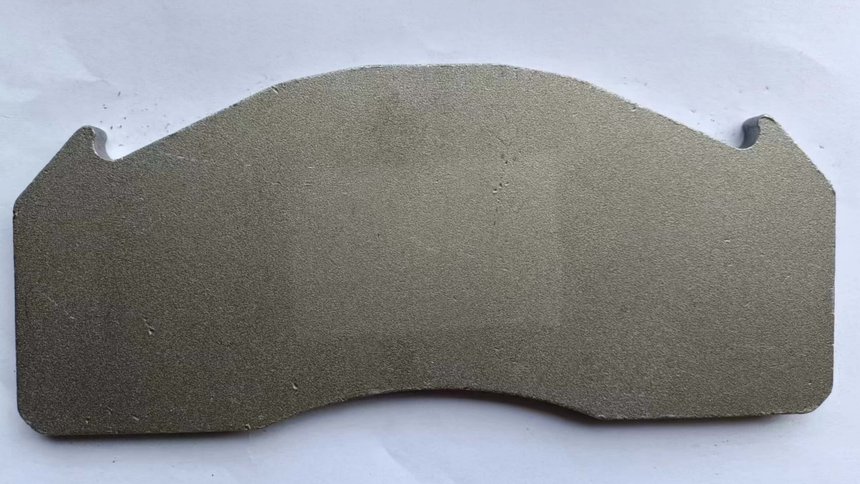
What are the characteristics of the steel backing material of brake pads?1、 Mechanical performance characteristics (1) High intensity BEARING CAPACITY The steel backing of brake pads has high strength, which is one of its most prominent features. During the braking process, the kinetic energy of the vehicle needs to be converted into heat energy through the braking system, which will generate enormous pressure on the brake pads. For example, during emergency braking of a high-speed car, the instantaneous pressure on the brake pads may reach several tons. The high strength of the steel back enables it to withstand such immense pressure without significant deformation or damage. It is like a strong shield, protecting the other parts of the brake pads and ensuring that the braking system can function properly. The high strength of the steel back is also reflected in its supporting effect on the friction material. Friction material is the part that directly contacts the brake disc to generate friction, and its texture is relatively soft. The high strength of the steel back can provide stable support for the friction material, preventing excessive deformation or rupture of the friction material under pressure. This is like when building a house, a sturdy foundation (steel back) can support relatively fragile walls (friction materials), ensuring the stability of the entire structure. Fatigue resistance Cars frequently use brakes during driving, which requires brake pad steel backs to have good fatigue resistance. Every time the brake is applied, the steel back will bear a certain amount of pressure and friction. After countless cycles like this, poor quality materials may develop fatigue cracks, ultimately leading to component failure. However, the brake pad steel back undergoes special heat treatment and material processing techniques to resist this fatigue. For example, through heat treatment processes such as quenching and tempering, the toughness and fatigue resistance of steel backing can be improved. This allows the steel back to maintain its original mechanical properties even after undergoing a large number of braking operations over a long period of use, without easily cracking or breaking. (2) Good rigidity Shape retention ability The rigidity of the steel back enables it to maintain its own shape. In the braking system, brake pads need to be precisely attached to the brake disc to ensure effective braking. If the rigidity of the steel back is insufficient, it is easy to bend or twist under pressure, and the brake pads cannot make good contact with the brake disc, thereby affecting the braking performance. For example, in some high-performance cars or heavy-duty vehicles, the pressure during braking is greater, and the requirement for steel back rigidity is also higher. With its excellent rigidity, the steel back can ensure that the brake pads can maintain their shape in various complex working conditions, such as emergency braking after high-speed driving, long-term downhill braking, etc., allowing the friction material to evenly contact the brake disc and achieve stable braking effect. This shape retention ability is also reflected in the stabilizing effect of the steel back on the entire brake pad structure. It can prevent the brake pads from deforming during installation and use, ensuring that all parts of the brake pads can perform their intended function. Like a precision mechanical component, the rigidity of the steel back ensures the accuracy and reliability of the brake pads. Anti deformation ability In addition to normal brake pressure, vehicles are also affected by various external factors during driving, such as road bumps, vehicle vibrations, etc. These factors may generate additional impact and twisting forces on the brake pads. The anti deformation ability of the steel back can resist these external forces and prevent unnecessary deformation of the brake pads. For example, when a car is driving on rough and uneven roads, the vibration of the wheels will be transmitted to the braking system. At this time, the steel back can absorb and disperse these vibrations, protect the friction material from damage, and also ensure the stability and reliability of the braking system.
2、 Physical properties and characteristics (1) Good thermal conductivity Thermal conductivity During the braking process, a large amount of heat is generated, and the steel back of the brake pad has good thermal conductivity, which can effectively dissipate this heat. When brake pads rub against brake discs, the heat generated by friction is first transferred to the steel backing. Due to the excellent thermal conductivity of the steel back, heat will quickly conduct inside the steel back and be transferred to other brake components connected to the steel back, such as brake calipers. This is like a heat conduction channel, dissipating heat in a timely manner and avoiding the accumulation of heat locally on the brake pads. For example, when driving in mountainous areas, vehicles need to brake frequently to control their speed. If the brake pads cannot dissipate heat in a timely manner, excessive temperature can lead to a decrease in the performance of the friction material, and even a dangerous situation of brake failure. The good thermal conductivity of the steel back can effectively solve this problem, ensuring that the brake system can work normally even in high temperature environments. Temperature uniformity The thermal conductivity of the steel backing can also ensure the temperature uniformity of the brake pads during operation. Due to the rapid conduction of heat in the steel backing, the temperature distribution of the entire brake pad is more uniform. This is crucial for maintaining consistent performance of brake pads. If the temperature of the brake pads is uneven and the local temperature is too high, it may cause excessive wear of the friction material in that part, while the friction material in other parts may not fully exert its braking effect due to lower temperatures. The thermal conductivity of the steel backing can prevent this situation from occurring, extend the service life of the brake pads, and also improve the safety and reliability of the brakes. (2) Appropriate density Balance between quality and performance The density of the brake pad steel back is moderate, which is the result of optimization considering its performance and quality. The appropriate density ensures that the steel back has sufficient mass to ensure its strength and rigidity, without increasing the burden on the vehicle due to excessive weight. For example, in the trend of lightweighting in automobiles, if the density of the steel back is too high, it will increase the unsprung mass of the vehicle, affecting its handling and fuel economy. On the contrary, if the density is too low, it may not meet its strength and rigidity requirements. The density of the steel back is also related to its heat dissipation performance. A steel back with moderate density can effectively conduct heat while ensuring sufficient heat capacity. Thermal capacity refers to the ability of an object to absorb and store heat. An appropriate thermal capacity can prevent the temperature of the steel back from rising sharply after absorbing a certain amount of heat, thus providing sufficient time for heat conduction. |